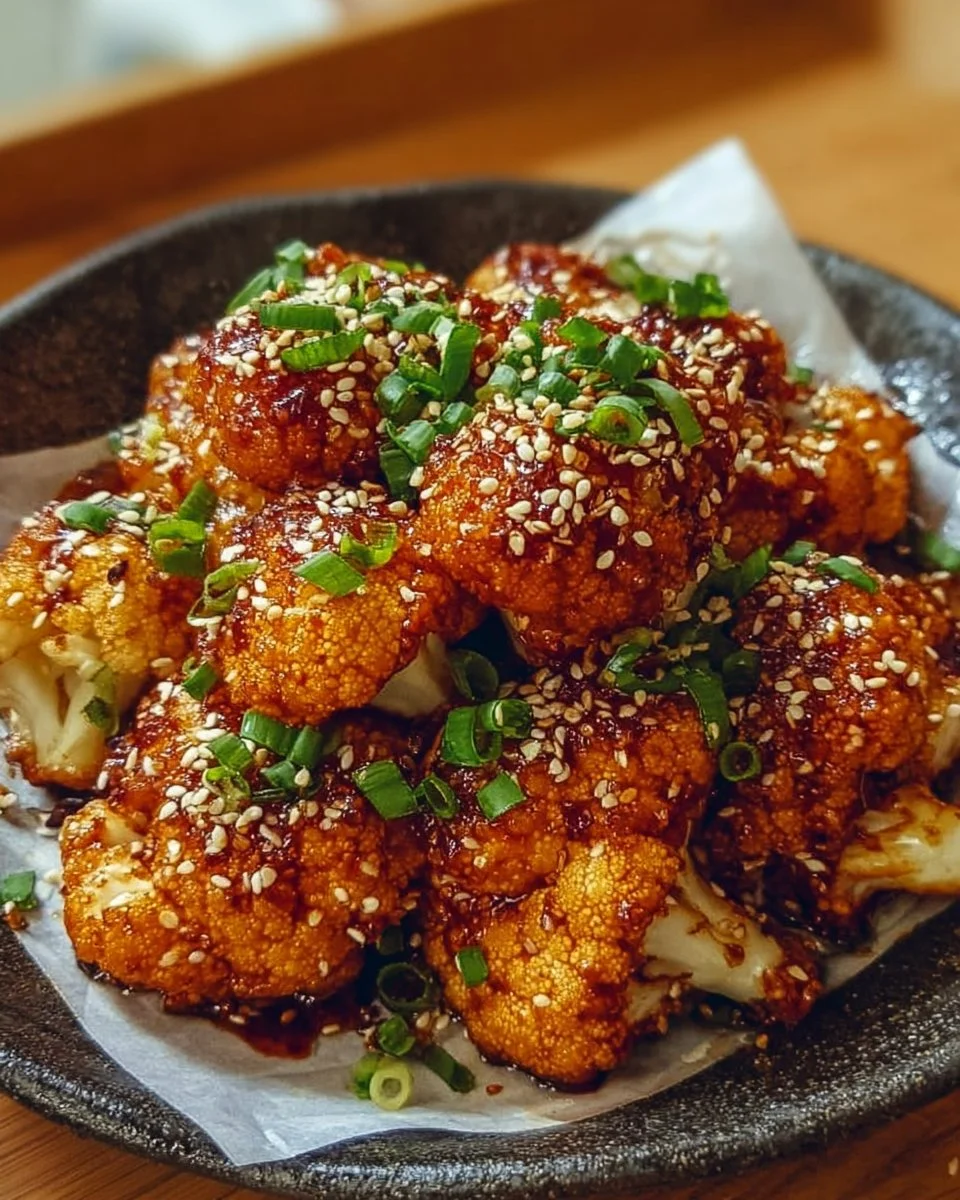
Korean Baked Cauliflower
I first made Korean baked cauliflower on a whim when I wanted something crunchy, saucy, and a little addictive but meatless. It quickly became my go-to for weeknights, potlucks, and game-day snacks because it hits sweet, salty, tangy, and spicy in one bite. If you want a tray-baked vegetable that can star as an appetizer, a side, or a main with rice, this recipe delivers — and it pairs surprisingly well with a hearty casserole like baked chicken stroganoff when you want a fuller plate.
What makes this recipe special
This version of Korean baked cauliflower takes humble florets and layers on a sticky, umami-rich gochujang sauce that caramelizes in the oven. Unlike deep-fried alternatives, baking keeps things lighter while still giving charred edges and a crisp bite. It’s fast (about 35–40 minutes from start to finish), budget-friendly, and flexible — great for feeding kids, vegetarians, or anyone who likes bold flavors without fuss.
“A tray of this disappears every time — sweet, spicy, and perfectly sticky.” — a regular at my dinner table
How this recipe comes together
Before you dig into the ingredients, here’s the simple workflow so you know what to expect:
- Preheat the oven and get a baking sheet ready.
- Toss cauliflower with oil and seasonings, then roast until golden and slightly charred.
- Whisk the gochujang sauce until smooth. Optionally reduce it on the stove for a thicker glaze.
- Coat the roasted cauliflower with the sauce and return briefly to the oven to set.
- Finish with sesame seeds and green onions, then serve hot.
This short sequence keeps the cauliflower crisp around the edges while giving you a deeply flavored coating.
What you’ll need
- Cauliflower: 1 large head, cut into florets
- Olive oil: 2 tablespoons (substitute neutral oil like avocado for higher smoke point)
- Salt: 1/2 teaspoon
- Black pepper: 1/2 teaspoon
Sauce:
- Gochujang: 2 tablespoons (Korean chili paste — use less for milder heat)
- Soy sauce: 2 tablespoons (or tamari for gluten-free)
- Sesame oil: 1 tablespoon
- Honey or maple syrup: 1 tablespoon (maple keeps it vegan)
- Rice vinegar: 1 teaspoon
- Garlic cloves, minced: 2
- Fresh ginger, grated: 1 teaspoon
Garnish:
- Toasted sesame seeds: 1 teaspoon
- Green onions, sliced: 2
Notes: If you don’t have fresh ginger, 1/4 teaspoon ground ginger will work. For lower sodium, reduce the soy sauce and add a pinch more honey or rice vinegar to balance.
Step-by-step instructions
- Preheat the oven to 400°F (200°C). Line a baking sheet with parchment for easier cleanup.
- Cut the cauliflower into uniform florets so they roast evenly. Pat them dry if wet.
- Toss the florets with 2 tablespoons olive oil, 1/2 teaspoon salt, and 1/2 teaspoon black pepper. Spread in a single layer on the prepared sheet.
- Roast for 25–30 minutes, turning once halfway through, until the edges are golden brown and slightly crispy.
- Meanwhile, whisk together 2 tablespoons gochujang, 2 tablespoons soy sauce, 1 tablespoon sesame oil, 1 tablespoon honey or maple, 1 teaspoon rice vinegar, 2 minced garlic cloves, and 1 teaspoon grated ginger until smooth.
- For a thicker, stickier glaze, pour the sauce into a small saucepan and simmer over medium heat for 3–5 minutes, stirring, until slightly reduced. Remove from heat.
- Take the cauliflower from the oven. Drizzle the sauce over the florets and toss gently to coat, or brush it on for a neater finish. Return to the oven for 5 minutes if you want the sauce to caramelize.
- Remove, sprinkle with toasted sesame seeds and sliced green onions, and serve immediately as a side, appetizer, or main with rice or noodles.

Serving suggestions
Serve hot straight from the sheet pan. This cauliflower works several ways:
- As a shareable appetizer with toothpicks and a side of pickled cucumbers.
- Over steamed rice or sticky rice for an easy vegetarian main.
- Tossed with cold noodles for a simple lunch.
- Paired at brunch alongside eggs — try it with protein-packed baked cottage cheese eggs for a higher-protein spread.
For plating, mound the florets in the center of a wide bowl, spoon any remaining sauce over the top, and finish with an extra sprinkle of sesame seeds and a few cilantro leaves for brightness.
How to store & freeze
Refrigerator: Cool completely, then store in an airtight container for up to 3–4 days. Reheat in a 375°F oven for 8–10 minutes to restore crispness, or in an air fryer for 4–6 minutes. Microwaving will warm it but soften the texture.
Freezer: You can freeze roasted cauliflower (without the fresh green onion garnish) in a single layer on a sheet until solid, then transfer to a freezer bag for up to 2 months. Thaw in the fridge overnight and re-crisp in the oven.
Food safety: Refrigerate within 2 hours of cooking and consume within 3–4 days.
Pro chef tips
- Cut florets to similar sizes so they roast evenly and finish at the same time.
- Don’t crowd the pan. Overcrowding steams the cauliflower instead of browning it. Use two sheets if needed.
- For deeper roast flavor, use a high-heat oil (avocado or light olive oil) and a hot oven.
- If your gochujang is extra salty, taste the sauce before adding and reduce the soy sauce.
- Toast your sesame seeds in a dry pan for 1–2 minutes until fragrant — it makes a difference.
Flavor swaps
- Milder version: Reduce gochujang to 1 tablespoon and add 1 tablespoon tomato paste for color and body.
- Vegan sweet: Use maple syrup instead of honey and tamari instead of soy.
- Smoky: Add 1/2 teaspoon smoked paprika to the sauce for a hint of smoke.
- Crunch boost: After glazing, sprinkle panko toasted in a little sesame oil for a crisp topping.
- Korean-inspired mix: Add a drizzle of mayonnaise (or vegan mayo) mixed with a touch of gochujang for a creamy finishing drizzle.
FAQ
Q: How long does the whole recipe take?
A: About 35–40 minutes total: 10 minutes prep and 25–30 minutes roasting, plus an optional 3–5 minutes if you reduce the sauce.
Q: Can I make this spicy or mild?
A: Yes. Gochujang is spicy and savory; reduce it to 1 tablespoon for milder heat or add more for extra kick. Balancing sweet (honey/maple) helps tame spiciness.
Q: Is this recipe gluten-free?
A: It can be. Use tamari or a gluten-free soy sauce to replace regular soy sauce. Check gochujang labels, as some brands may contain wheat.
Q: Will the cauliflower get soggy?
A: Overcrowding the pan or microwaving leftovers causes sogginess. Roast on a single layer, and re-crisp in the oven or air fryer when reheating.
Q: Can I air-fry instead of baking?
A: Yes. Air-fry at 375°F for 12–15 minutes, shaking halfway. Add the sauce in the last 2–3 minutes to avoid burning.
Conclusion
If you want another take or inspiration, see the original Korean Baked Cauliflower – Chez Jorge for a slightly different spin and plating ideas.
Print
Korean Baked Cauliflower
- Total Time: 40 minutes
- Yield: 4 servings
- Diet: Vegetarian
Description
A delicious vegetarian dish featuring crispy baked cauliflower coated in a sticky, umami-rich gochujang sauce, perfect as an appetizer, side, or main dish.
Ingredients
- 1 large head cauliflower, cut into florets
- 2 tablespoons olive oil
- 1/2 teaspoon salt
- 1/2 teaspoon black pepper
- 2 tablespoons gochujang
- 2 tablespoons soy sauce
- 1 tablespoon sesame oil
- 1 tablespoon honey or maple syrup
- 1 teaspoon rice vinegar
- 2 garlic cloves, minced
- 1 teaspoon fresh ginger, grated
- 1 teaspoon toasted sesame seeds, for garnish
- 2 green onions, sliced, for garnish
Instructions
- Preheat the oven to 400°F (200°C) and line a baking sheet with parchment paper.
- Cut the cauliflower into uniform florets and pat them dry.
- Toss the florets with olive oil, salt, and black pepper, then spread in a single layer on the baking sheet.
- Roast for 25–30 minutes, turning once halfway through, until edges are golden brown and slightly crispy.
- Meanwhile, whisk together gochujang, soy sauce, sesame oil, honey/maple syrup, rice vinegar, minced garlic, and grated ginger until smooth.
- For a thicker glaze, simmer the sauce in a small saucepan over medium heat for 3–5 minutes.
- Remove the cauliflower from the oven, drizzle sauce over the florets, and toss to coat. Return to the oven for 5 minutes to caramelize the sauce.
- Sprinkle with toasted sesame seeds and sliced green onions, then serve hot.
Notes
If you don’t have fresh ginger, 1/4 teaspoon ground ginger can be used. For lower sodium, reduce soy sauce and add a pinch more honey or rice vinegar to balance.
- Prep Time: 10 minutes
- Cook Time: 30 minutes
- Category: Main Course
- Method: Baking
- Cuisine: Korean