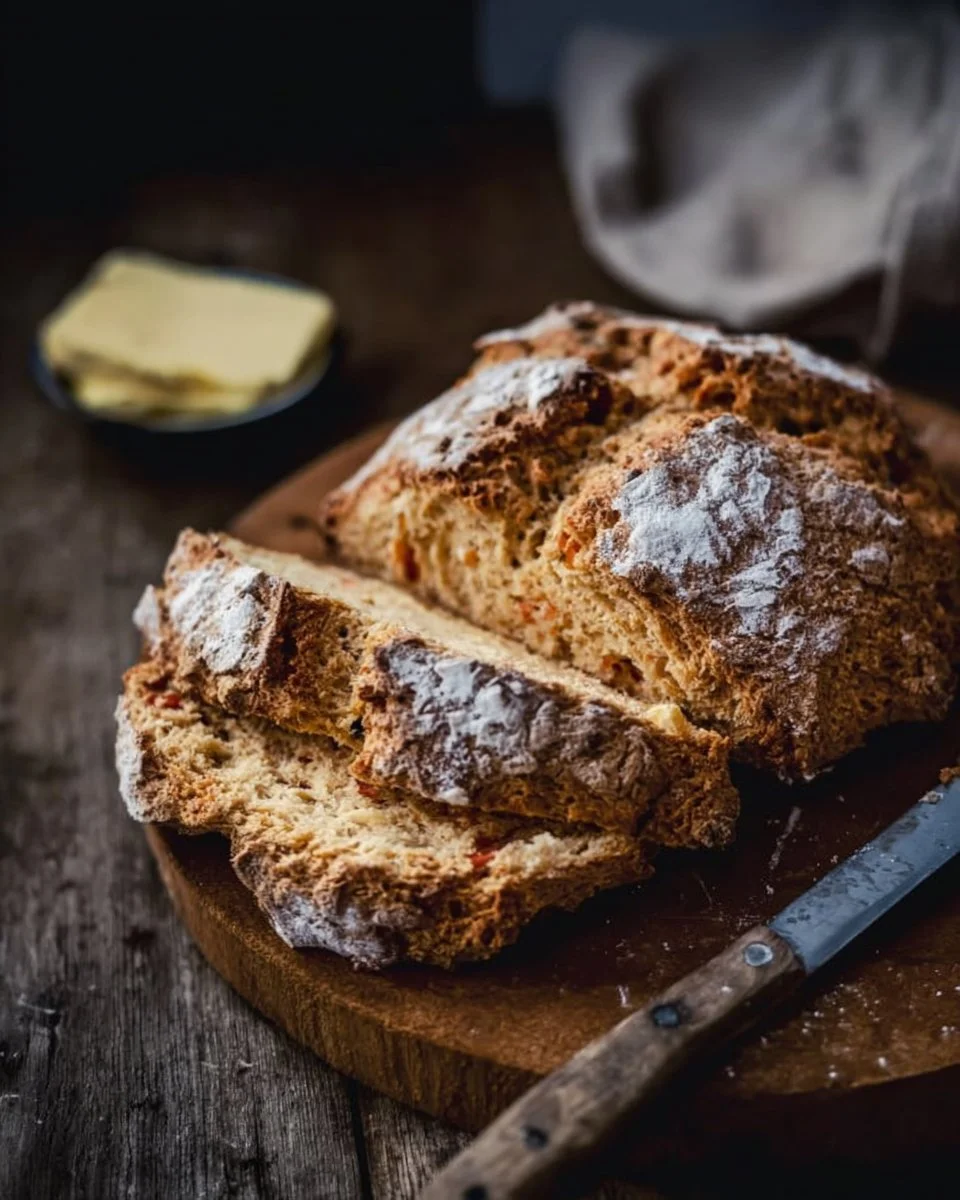
Traditional Irish Soda Bread
I still remember the smell of warm soda bread coming out of my grandmother’s oven: nutty, crusty, and simple. Traditional Irish soda bread is that kind of loaf — rustic, fast, and made without yeast. It’s a quick pantry bake that’s as at-home on a casual family table as it is beside a bowl of stew at a St. Patrick’s Day gathering. If you enjoy easy bakes with big reward, you might also like my take on a sweet breakfast twist like banana bread baked oats for mornings when you want something different.
Why you’ll love this dish
This bread is gloriously uncomplicated. It requires no rising time because baking soda provides the lift, so a mix-and-bake rhythm gets you a fresh loaf in under an hour. The crust develops deeply with high initial heat, while the interior stays tender and slightly crumbly. It’s budget-friendly and forgiving — few tools, minimal ingredients, and even beginners find success. Serve it warm for brunch, alongside thick soup on a weeknight, or sliced with sharp cheese for a simple snack.
How this recipe comes together
Start by bringing dry ingredients together in one bowl. Make a well, pour in cold buttermilk, and fold briefly until the shaggy dough clumps. Turn the dough out, give it just four gentle kneads to bring it together, then shape it into a round. A sharp slash across the top lets steam escape and gives the signature cross. Bake first at high heat to set the crust, then lower the oven so the center cooks through without burning. Resting for 20 minutes after baking finishes the loaf and makes slicing cleaner.
What you’ll need
- 3 1/2 cups unbleached all purpose flour (420 g)
- 3/4 teaspoon kosher salt (3 g)
- 3/4 teaspoon baking soda
- 1 1/2 cups buttermilk (337 g)
Notes: Use unbleached flour for better flavor and texture. If your buttermilk is very thin, you can add a tablespoon extra — the dough should be shaggy but hold together. For kosher salt measured by volume, adjust slightly if using table salt.
Step-by-step instructions
Preheat the oven to 450°F. Line a baking sheet with parchment paper and set it aside.
In a large mixing bowl, add the flour, salt, and baking soda. Whisk them together until evenly distributed.
Using a wooden spoon, make a well in the center of the dry ingredients. Pour the buttermilk into the well.
Stir gently with the spoon, beginning in the center and working outward. Don’t overmix — a very shaggy, rough dough is exactly what you want.
Lightly flour a work surface and turn the dough out onto it. Using your hands, knead the dough only about four times so it comes together and the surface becomes slightly smoother.
Shape the dough into a round loaf using the palms of your hands. Transfer the loaf to the prepared baking sheet. Lightly dust the top with flour.
With a sharp chef’s knife, cut a large X into the top of the dough to allow steam to escape.
Place the loaf in the oven and bake at 450°F for 15 minutes. Then lower the temperature to 400°F, rotate the pan 180°, and bake another 25–30 minutes until the crust is a deep golden brown and the loaf sounds hollow when tapped on the bottom.
Allow the bread to cool for at least 20 minutes before slicing. Serve warm with Kerrygold Salted Butter for an authentic touch. 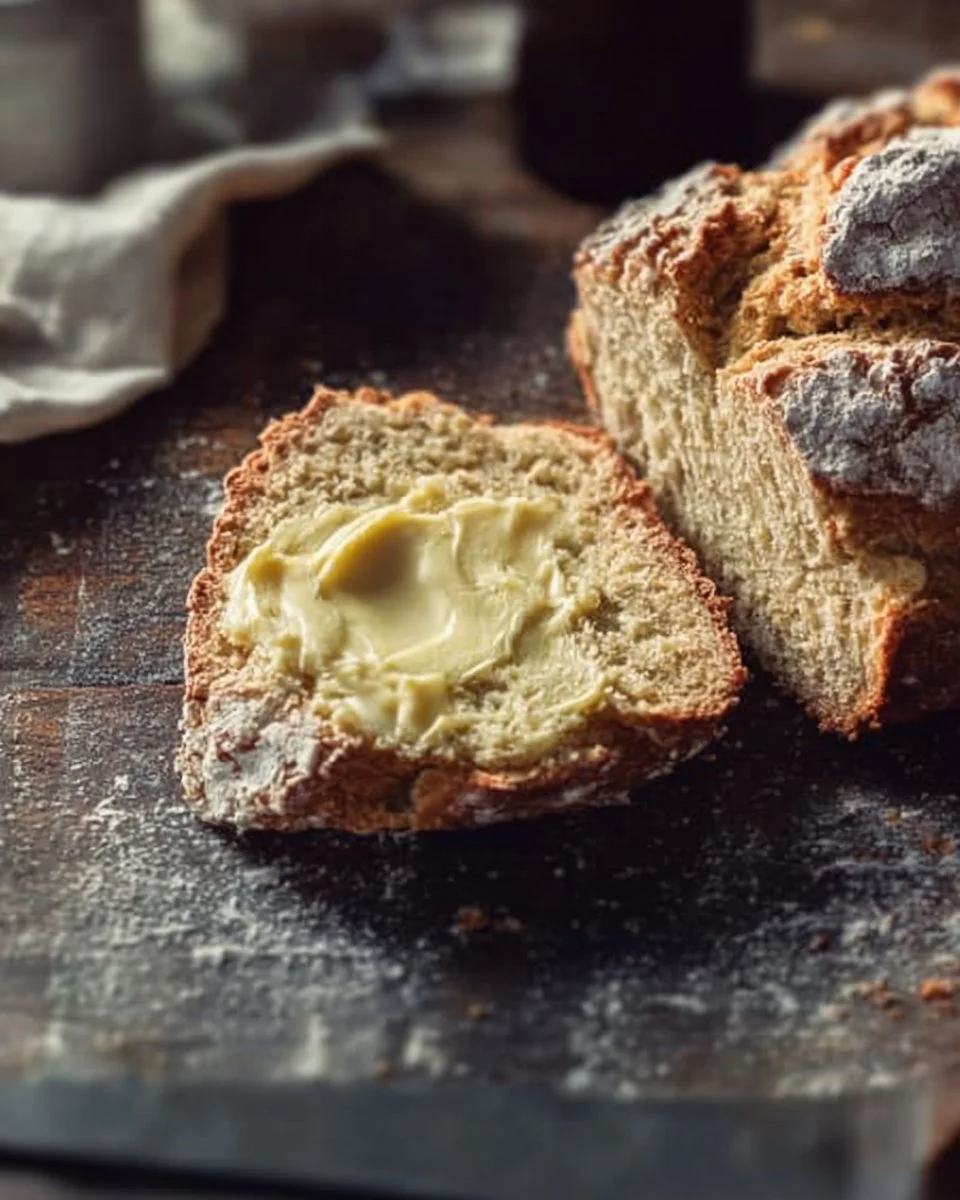
Best ways to enjoy it
Soda bread is wonderfully versatile. Slice and serve warm with salted butter and jam for breakfast. For a cozy dinner, cut thick wedges and offer alongside beef stew or lamb stew to soak up the broth. For a casual board, pair slices with sharp cheddar, smoked salmon, or pickled vegetables. If you want to build a hearty brunch, try it with our chicken Alfredo garlic bread bowls for a contrast of textures and flavors.
Keeping leftovers fresh
Cool the loaf completely before storing to prevent sogginess. At room temperature, wrapped in a clean kitchen towel or paper bag, soda bread stays good for about 1–2 days. Refrigeration tends to dry it out, so avoid the fridge unless your kitchen is very warm. For longer storage, double-wrap in foil and place in a freezer bag; freeze up to 3 months. To reheat, thaw at room temperature and warm in a 350°F oven for 10–15 minutes, or microwave a single slice for 10–15 seconds if you’re in a hurry.
Pro chef tips
- Measure flour by weight for consistent results; 420 g = 3 1/2 cups unbleached all-purpose flour.
- Don’t overwork the dough. Minimal kneading preserves a tender crumb.
- Make sure your baking soda is fresh — it’s the only leavening. A quick test: a pinch in a little vinegar should fizz.
- If you want a very crusty exterior, place the loaf on a preheated baking stone or cast-iron pan.
- Traditional soda bread is plain. Skip egg washes and sugar if you want an authentic flavor.
Creative twists
- Spotted dog/railway cake: Stir in 1/2–3/4 cup raisins or currants for a sweeter version.
- Cheddar & chive: Fold in 3/4 cup grated sharp cheddar and 2 tablespoons chopped chives.
- Whole-grain: Replace 1 cup of the flour with whole wheat for a nuttier profile.
- Seeded: Press sesame, poppy, or sunflower seeds onto the top before baking for an attractive finish.
- Gluten-free: Use a tested gluten-free flour blend that calls for xanthan gum and adjust liquid as needed.
Common questions
Q: How long does this soda bread take from start to finish?
A: Active hands-on time is about 15–20 minutes. Baking plus resting brings total time to roughly 1 hour.
Q: Can I use milk instead of buttermilk?
A: You can make a quick buttermilk substitute by adding 1 tablespoon lemon juice or white vinegar to 1 1/2 cups milk and letting it sit 5 minutes. For the most authentic tang and lift, use actual buttermilk.
Q: How do I know the loaf is done?
A: It should be deeply golden and sound hollow when you tap the bottom. An internal temperature near 200°F indicates doneness.
Q: Can I make the dough ahead of time?
A: Because baking soda reacts immediately with acid, it’s best to bake immediately. You can mix dry ingredients ahead; add buttermilk and bake when ready.
Q: Is this the same as a soda farl?
A: Soda farls are a regional, skillet-cooked variation shaped into quarters. This recipe is the round oven-baked traditional loaf.
Conclusion
If you want to compare method and history to another classic take on the loaf, see this write-up of Traditional Irish Soda Bread for more background and technique notes.
Print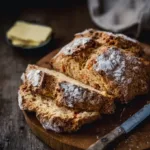
Traditional Irish Soda Bread
- Total Time: 60 minutes
- Yield: 1 loaf (about 8 servings)
- Diet: Vegetarian
Description
A simple and rustic Irish soda bread made without yeast, perfect for any occasion.
Ingredients
- 3 1/2 cups unbleached all purpose flour (420 g)
- 3/4 teaspoon kosher salt (3 g)
- 3/4 teaspoon baking soda
- 1 1/2 cups buttermilk (337 g)
Instructions
- Preheat the oven to 450°F. Line a baking sheet with parchment paper and set it aside.
- In a large mixing bowl, add the flour, salt, and baking soda. Whisk them together until evenly distributed.
- Using a wooden spoon, make a well in the center of the dry ingredients. Pour the buttermilk into the well.
- Stir gently with the spoon, beginning in the center and working outward until you have a shaggy dough.
- Lightly flour a work surface and turn the dough out onto it. Knead the dough only about four times to combine.
- Shape the dough into a round loaf and transfer it to the prepared baking sheet. Dust the top lightly with flour.
- Cut a large X into the top of the dough with a sharp chef’s knife to allow steam to escape.
- Bake at 450°F for 15 minutes, then lower the temperature to 400°F and bake another 25–30 minutes until golden brown and hollow-sounding when tapped.
- Allow to cool for at least 20 minutes before slicing.
Notes
Use unbleached flour for better flavor and texture. For very thin buttermilk, add an extra tablespoon. Be careful not to overmix the dough.
- Prep Time: 20 minutes
- Cook Time: 40 minutes
- Category: Bread
- Method: Baking
- Cuisine: Irish